
Engine Issues in German Cars — and What to Do Next

Engine issues in German cars can appear suddenly and cause major concern. Recognizing symptoms early prevents breakdowns and expensive repairs. Owners of BMW, Audi, Mercedes, and Volkswagen should know the signs and solutions.
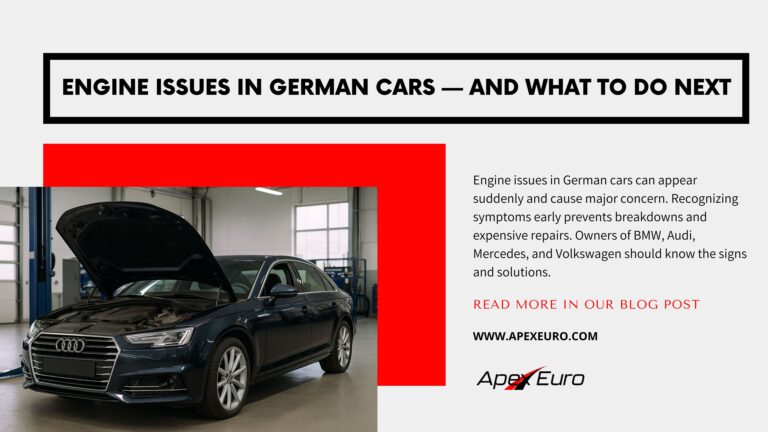
Engine issues in German cars
Warning Lights on the Dashboard
One of the most common signs of engine issues in German cars is dashboard warning lights. When the check engine light turns on, immediate action is needed. Ignoring these alerts leads to serious damage. Schedule diagnostics with a certified technician to uncover the problem.
Strange Noises Under the Hood
Unusual noises often point to engine issues in German cars. Knocking, rattling, or ticking sounds may signal worn components or low oil. Squealing belts or grinding noises also indicate mechanical problems. Visiting a trusted repair shop quickly ensures proper diagnosis and timely repair.
Loss of Power and Acceleration
Performance changes are another red flag. Engine issues in German cars often cause sluggish acceleration or poor fuel economy. The car may struggle to climb hills or pass other vehicles. These problems usually stem from clogged filters, failing sensors, or fuel system issues. Prompt inspections prevent worsening damage.
Overheating Problems
Overheating is a serious sign of engine issues in German cars. Steam from the hood or high temperature readings demand urgent attention. Common causes include coolant leaks, broken water pumps, or faulty thermostats. Driving with an overheated engine can lead to permanent damage. Always stop and call for assistance.
Unusual Exhaust Smoke
Exhaust smoke color reveals much about engine issues in German cars. Blue smoke indicates oil burning inside the engine. Black smoke suggests excess fuel consumption, while white smoke points to coolant leaks. Each case requires expert inspection to prevent major engine repairs.
Oil Leaks and Fluid Spots
Visible oil leaks or fluid spots under the vehicle are warning signs. Engine issues in German cars often begin with minor leaks. Over time, these leaks cause low fluid levels and severe engine wear. Regularly check driveways and garage floors for leaks. Quick action avoids expensive repairs.
What to Do Next
Once you notice engine issues in German cars, act immediately. Schedule a diagnostic service with a certified German car specialist. Always use manufacturer-approved parts and fluids during repairs. Follow the recommended maintenance schedule to avoid future problems. Never ignore small issues, as they often grow into costly failures.
Preventive Maintenance for German Cars
Preventive steps reduce the chances of engine issues in German cars. Regular oil changes, coolant flushes, and spark plug replacements improve reliability. Keep air filters clean and ensure proper tire alignment for overall performance. Preventive care ensures smoother drives and longer engine life.
Stay Ahead of Engine Issues
Engine issues in German cars can be frustrating but manageable when detected early. Warning lights, noises, smoke, or leaks all require immediate attention. Professional diagnostics and preventive maintenance protect your investment. Acting quickly keeps German cars safe, efficient, and reliable on the road.

engine issues in German cars, German car engine problems, German car maintenance, diagnose engine issues, German car repair